


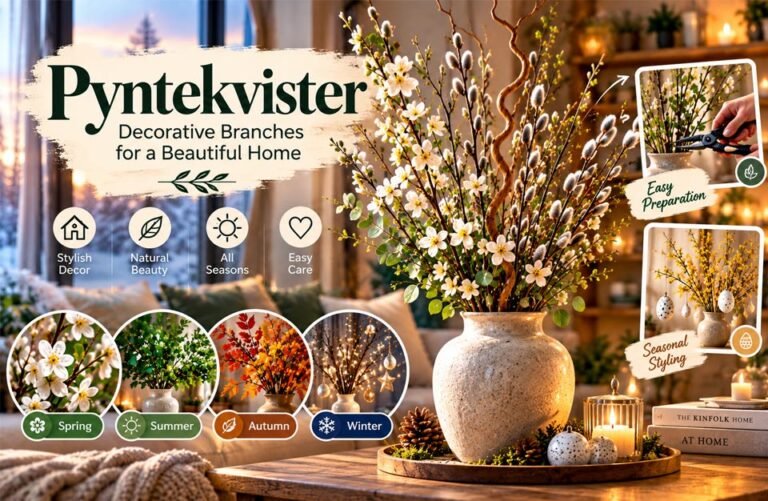
Pyntekvister is a simple way to decorate a home with branches and twigs. You can use fresh, dry, bare, flowering, or painted branches. You can also add small lights or decorations.
The word has Scandinavian roots and means decorative branches or twigs. People often search for Pyntekvister to learn what it means, which branches to use, and how to style them at home.
This guide explains Pyntekvister, its meaning, popular branch types, styling ideas, care, and safety tips.
What Is Pyntekvister?
Pyntekvister means using branches or twigs as home decoration. The branch itself is the main part of the display.
Branches do not need to be straight or perfect. Curves, forks, knots, bark, buds, and leaves can make them more interesting. Their natural shapes are part of their beauty.
You can put one large branch in a vase or use several smaller branches together. Fresh branches may have leaves, buds, or flowers. Dried branches can be kept for much longer.
Branches can also be painted or decorated with small lights and ornaments. There is no single correct way to create Pyntekvister.
What Does Pyntekvister Mean?
Pyntekvister is connected with Norwegian and Danish words. Pynte means to decorate. Kvist means a twig or small branch, while kvister means more than one twig or branch.
In simple English, Pyntekvister means decorative branches or decorative twigs.
It is not a company, app, brand, or special product. It is simply a term connected with using branches for decoration.
The Scandinavian Connection
Pyntekvister fits well with Scandinavian home design. This style often uses simple decoration and natural materials such as wood, plants, stone, and wool.
Branches work well because they bring a little nature indoors without filling the room with too many things. Their natural shapes also look different from the straight lines of tables, shelves, doors, and walls.
Branches can also change with the seasons. Bare branches work well in winter. Budding and flowering branches can be used during spring.
Decorated branches are also part of some Scandinavian seasonal customs. One example is påskeris, an Easter custom linked with Denmark and Norway. Branches may be decorated with eggs, feathers, or other small items.
Some websites describe Pyntekvister as an ancient Nordic tradition. However, there is not enough strong information to confirm that Pyntekvister itself is one old tradition with fixed rules. Its Scandinavian language and design connection is much clearer.
Why Pyntekvister Is Popular in Home Decor
Decorative branches can add height and shape to a room without taking up much space. This makes them useful for small rooms and empty corners.
Their curved and uneven shapes also look different from straight furniture and walls. The bark, knots, and natural colors add texture to a room.
Pyntekvister can also be cheap to create. You may be able to use suitable branches left after pruning plants in your own garden.
Dried branches can last much longer than fresh flowers. You can also keep the same branches and change their decorations during different seasons.
Best Branches for Pyntekvister
Many kinds of branches can be used for Pyntekvister. The best choice depends on the shape, size, condition, and style you want.
Birch has light-colored bark and fine branches. It works well in light and simple rooms.
Curly willow, also called corkscrew willow, has twisted branches. Its unusual shape makes it a good choice when you want the branch to stand out.
Pussy willow has soft catkins and is often used for spring decoration.
Hazel can have twisted and uneven branches. It works well with natural and rustic decor.
Dogwood can have colorful stems depending on the type and season.
Cherry and apple branches may develop flowers indoors when they are cut at the right time and kept in suitable conditions.
Eucalyptus is another choice. It can be useful in places where birch, hazel, and similar branches are harder to find.
You do not always need to focus on the tree type. Look for healthy branches with interesting curves and shapes.
Do not use branches with mold, serious damage, rot, or unwanted insects.
Fresh vs. Dried Pyntekvister
Fresh branches are a good choice when you want leaves, buds, flowers, or green color. Some fresh branches may continue to grow buds or flowers after being placed in water.
Fresh branches need more care. They may need clean water and trimmed ends. Dead leaves and flowers should also be removed.
Dried branches are much easier to care for. They do not need water and may stay in good condition for months or even longer.
Branches can also be preserved or painted. Painted branches are useful when you want a certain color for your room or seasonal decoration.
There is no exact lifespan for Pyntekvister. It depends on the branch type, moisture, room conditions, and how the branches are cared for.
How to Collect Pyntekvister Responsibly
You may be able to find useful branches in your own garden. Branches left after normal pruning can sometimes be used instead of being thrown away.
Fallen branches may also work if they are healthy and you are allowed to collect them.
Do not cut branches from someone else’s trees without permission. You should also check local rules before collecting branches from parks, forests, nature reserves, or other public areas.
If you cut branches from your own plants, do it carefully. Do not damage a healthy tree just to get a decorative branch.
Using garden leftovers and reusing dried branches can also help reduce waste.
How to Prepare Branches for Indoor Use
Check outdoor branches carefully before bringing them inside.
Look for dirt, insects, mold, rot, moisture, loose bark, and damaged areas. Small holes in the wood may also be a sign of insects.
Remove dirt, dead leaves, and anything else you do not want on the branch.
If you are putting fresh branches in water, make a clean cut near the bottom of each stem. Remove leaves that would sit under the water because they may start to rot.
Branches for a dry display should be properly dried. Do not store wet branches in a closed space because moisture can lead to mold.
Some branches can also be preserved with special methods. For example, glycerin mixed with water is sometimes used to help certain leaves stay soft. This is optional and is not needed for every arrangement.
You can also paint clean, dry branches. White, black, gold, silver, and other colors can be used depending on the look you want.
How to Choose the Right Vase
The vase should look good, but it also needs to hold the branches safely.
Large and tall branches need a strong, heavy vase. Ceramic, stone, earthenware, and strong glass containers can work well.
A narrow vase opening keeps branches closer together. A wider opening lets them spread out.
Make sure the vase matches the height and weight of the branches. A tall branch in a small, light vase may easily fall over.
Simple ceramic and clear glass vases work well when you want the branches to be the main focus.
How to Arrange Pyntekvister
Start with your most interesting branch. Put it in the vase and turn it until its best shape faces the room.
Add other branches only when needed. They do not need to be the same height or face the same direction. Different heights and angles can make the arrangement look more natural.
Do not fill the vase with too many branches. Leave some open space between them so their shapes are easy to see.
Sometimes three or four branches are enough. You can even use one large branch by itself.
Step back and look at the arrangement when you are finished. Make sure it looks balanced with the vase, furniture, and room.
Where to Use Pyntekvister in the Home
Pyntekvister can be used in many rooms.
Tall branches can work well in a living room corner or in a floor vase near a wall. Smaller branches can sit on a side table or console.
In a bedroom, a small arrangement can be placed on a dresser or another safe surface.
Entryways and hallways can also use taller branches, but they should not block doors or walking areas.
A small arrangement can work in a home office and add a natural touch around desks and shelves.
For a dining table, use shorter branches. Very tall branches may make it difficult for people to see each other across the table.
Pyntekvister Styling Ideas
One branch in a simple vase can be enough. You do not need a large arrangement.
For a Scandinavian or minimalist look, use a few branches with a plain vase. Light birch branches can work well with white, cream, gray, and natural wood colors.
Pyntekvister also works with Japandi and organic modern decor because these styles use natural materials and simple shapes.
For a rustic room, try thicker branches with visible bark and knots. A clay or textured vase can match this style.
Curly willow is useful when you want something more noticeable because its twisted shape naturally stands out.
You can also add ribbons, paper decorations, dried flowers, or small ornaments. Keep the decorations simple so the branches are still easy to see.
Seasonal Pyntekvister Ideas
Pyntekvister can be changed throughout the year. You can use different branches for each season or keep the same dried branches and change the decorations.
Spring and Easter
Spring is a good time for pussy willow and budding branches. Cherry and apple branches may also flower indoors under the right conditions.
For Easter, you can hang small eggs, feathers, ribbons, or other light decorations from the branches.
Do not add too many items. Leave enough open space so the branches remain visible.
Summer
Fresh green branches can bring natural color into the home during summer.
Place them in a simple vase and give them water when needed. Remove leaves that start to die or rot.
Autumn
Dried and bare branches work well during autumn. You can also add dried leaves, seedheads, or pine cones.
Natural colors such as brown, beige, dark orange, rust, and muted green can match the season.
You can also leave the branches completely bare.
Winter and Christmas
Bare branches work well in winter because their natural shape is easy to see.
For Christmas, you can add small stars, wooden ornaments, ribbons, bells, snowflakes, or lights.
Dried orange slices and pine cones can also be used if the branches are strong enough.
A tall branch arrangement can be useful in a small home when you want simple Christmas decoration without using much floor space.
Using Lights With Pyntekvister
Small LED lights can be wrapped around decorative branches.
Battery-powered lights are useful because you do not need to keep the vase close to a wall outlet.
Wrap the wire loosely around stronger branches. Do not use too many lights because they can hide the natural shape.
Always use lights as directed by the manufacturer. Keep dry branches away from candles, fireplaces, hot lamps, and open flames.
How to Care for Pyntekvister
The right care depends on whether your branches are fresh or dried.
Fresh Branches
Fresh branches in water should be checked regularly. Change the water when it becomes dirty.
Remove dead leaves, flowers, and any parts that start to rot.
Some branches may develop buds, flowers, or leaves indoors. Others may slowly dry out. The results depend on the plant, temperature, light, and condition of the branch.
Dried Branches
Dried branches do not need water. In fact, too much moisture may cause mold or damage.
Dust them gently with a soft cloth or duster. Be careful because small dried twigs can become brittle and break easily.
If you store the branches between seasons, keep them somewhere clean and dry. Do not place heavy objects on top of them.
How Long Does Pyntekvister Last?
There is no exact answer because different branches last for different amounts of time.
Fresh branches may look good for days or weeks. Their lifespan depends on the plant, water, temperature, and when they were cut.
Flowering branches may not last as long once their flowers have opened.
Dried branches can last much longer. Properly dried branches may stay usable for months or even years if they remain dry and free from pests and damage.
Throw away branches if you find serious mold, rot, unwanted insects, bad smells, or damage that makes them unsafe.
Pyntekvister Safety Tips
Branches from outdoors should always be checked before being used inside.
Some plants can be harmful to people or animals. Oleander and yew are examples that need special care. If you have children or pets, check the exact plant before bringing it into your home.
Keep sharp branches away from busy walking areas. Tall arrangements should be placed in strong, heavy vases so they do not easily fall over.
Keep dried branches away from candles, fireplaces, open flames, hot lamps, and other heat sources.
Do not hang heavy decorations from thin branches. They may bend or break.
Common Pyntekvister Mistakes to Avoid
Do not put too many branches in one vase. A few well-shaped branches can look better because you can clearly see each one.
Do not use a small, light vase for tall branches. The arrangement may fall over.
Always check outdoor branches before bringing them inside. Look for insects, mold, dirt, moisture, and rot.
Think about where you place the vase. Tall branches should not block people’s view across a dining table. Wide or sharp branches should not block hallways or doors.
Do not cover the branches with too many ornaments. The natural shape should still be easy to see.
Also remember basic safety. Keep dried wood away from fire and heat, and check whether a plant is safe if children or pets can reach it.
Pyntekvister vs. Other Natural Decorating Styles
Pyntekvister is similar to some other types of natural home decoration, but there are important differences.
Ikebana is a Japanese art of arranging flowers, branches, leaves, and other plant materials. It has established ideas and methods for arranging them.
Pyntekvister is much simpler and less formal. There is no single method you must follow. The branch itself is usually the main part of the decoration.
Pyntekvister is also different from hygge. Hygge is a wider Danish idea connected with comfort, warmth, and a pleasant home feeling. Pyntekvister can be part of a hygge-style room, but the two words do not mean the same thing.
Decorative branches can also work with Japandi, minimalist, rustic, and organic modern styles.
Bottom Line
Pyntekvister means using branches and twigs as home decoration. The word has Norwegian and Danish language roots and can simply be understood as decorative branches or twigs.
Many types of branches can be used, including birch, willow, pussy willow, hazel, dogwood, cherry, and apple. You can use fresh, dried, bare, flowering, preserved, or painted branches.
Choose healthy branches that fit your room. Clean and prepare outdoor branches before bringing them inside. Use a strong vase and leave enough space between the stems.
Pyntekvister does not need to be complicated. A simple vase and a few interesting branches can be enough.
Frequently Asked Questions
What does Pyntekvister mean?
Pyntekvister means branches or twigs used to decorate a home.
What branches are best for Pyntekvister?
Birch, willow, hazel, cherry, apple, and other healthy branches can be used.
Does Pyntekvister need water?
Fresh branches may need water. Dried branches do not need water.
How long does Pyntekvister last indoors?
Fresh branches may last days or weeks. Dried branches can last for months or even years.
Can I make Pyntekvister from branches in my garden?
Yes. You can use healthy branches from your garden after pruning. Check them for insects, mold, and damage first.
Is Pyntekvister a Scandinavian tradition?
Pyntekvister has Scandinavian roots and fits Scandinavian home decor. Branch decorating is also used in some Scandinavian seasonal customs.
Is Pyntekvister safe around pets and children?
It can be safe, but some plants can be harmful. Check the plant type and keep sharp branches out of reach.
Discover More:
