


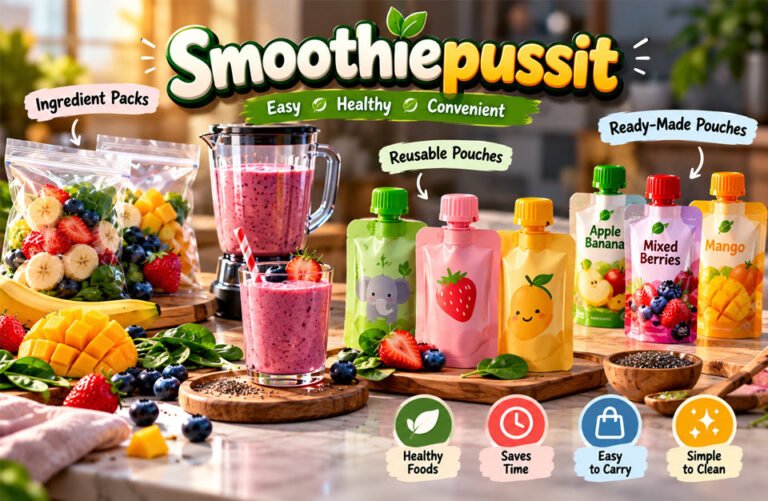
Smoothiepussit is an informal term linked with smoothie bags and pouches. It can mean ingredient packs for making smoothies, reusable pouches filled at home, or ready-made smoothie and fruit pouches.
These pouches and packs can make food easier to prepare, store, and carry. They can be useful for children, adults, school, work, travel, and busy days.
This guide explains what Smoothiepussit are, how they work, what you can put in them, and how to use them safely. It also covers nutrition, storage, cleaning, freezing, and buying tips.
What Are Smoothiepussit?
Smoothiepussit is an informal term for different types of smoothie bags and pouches. The Finnish word pussit means bags or pouches.
The term does not have one fixed meaning. It can describe bags filled with fruit, vegetables, oats, seeds, or other ingredients that are ready to blend.
It can also mean reusable squeeze pouches filled with homemade smoothies, fruit puree, yogurt, oatmeal, or other soft foods.
Some people may also use the term for ready-made smoothie or fruit pouches sold in stores.
Smoothiepussit is not one specific recipe, diet, or established brand. Its meaning depends on how the term is being used.
How Do Smoothiepussit Work?
How Smoothiepussit work depends on the type.
For ingredient packs, fruit and vegetables are washed, cut, and divided into portions. Oats, seeds, or other suitable foods can also be added.
When you want a smoothie, put one portion into a blender. Add water, milk, yogurt, coconut water, or another suitable liquid. Blend everything until smooth.
Reusable pouches work differently. First, prepare the smoothie or soft food. Then put it into a clean food-safe pouch and close it properly.
Ready-made pouches need little or no preparation. The food is already inside and can usually be eaten directly from the pouch.
Storage rules can be different for each product. Some need to stay cold, while others can stay at room temperature before opening. Always follow the instructions on the package.
Main Types of Smoothiepussit
There are three main types of Smoothiepussit.
Smoothie Ingredient Packs
These packs contain ingredients that are prepared for later blending. They may contain fruit, vegetables, oats, seeds, or other smoothie foods.
They can save time because the ingredients are already washed, cut, and divided into portions. Many suitable ingredients can also be frozen for later use.
Liquid is usually added when you are ready to blend the smoothie.
Reusable Smoothie Pouches
Reusable smoothie pouches are sold empty. You can fill them at home with smoothies, puree, yogurt, oatmeal, or other suitable soft foods.
They may be made from food-safe silicone or flexible plastic. Their size, shape, opening, and seal can differ.
They can be washed and used again. However, they need proper cleaning after every use.
Ready-Made Pouches
Ready-made pouches already contain food. They may contain smoothies, fruit puree, vegetable puree, or another soft food.
They are easy to use because you do not need to prepare or fill them yourself. They can be useful for school, travel, or busy days.
Ingredients, nutrition, and storage rules can be different for each product.
What Can You Put in Smoothiepussit?
Many types of fruit can be used in Smoothiepussit. Common choices include banana, strawberries, blueberries, raspberries, mango, peach, apple, pear, pineapple, and cherries.
You can use fresh or frozen fruit. Frozen fruit can make a smoothie colder and thicker.
Vegetables can also be added. Spinach is a common choice because it blends easily with fruit. Other options include carrot, cucumber, zucchini, beetroot, pumpkin, and avocado.
You also need a suitable liquid for many smoothies. Water, milk, oat milk, soy milk, almond milk, coconut water, and yogurt are common choices.
Oats can make a smoothie more filling. Chia, flax, and hemp seeds can add fiber and fats.
Greek yogurt, milk, soy foods, cottage cheese, and nut butter can add protein. Cinnamon and ginger can be used for extra flavor.
Honey, maple syrup, or dates can add sweetness. However, ripe fruits such as banana and mango may already make the smoothie sweet enough.
Food placed in a squeeze pouch should be smooth. Large pieces, hard bits, or very thick food can block the spout.
Fruit puree, vegetable puree, yogurt, soft oatmeal, and well-blended smoothies usually work well.
Are Smoothiepussit Healthy?
Smoothiepussit can be part of a healthy diet, but it depends on what is inside them.
There is no fixed amount of calories, protein, fiber, fat, or sugar because every smoothie can contain different ingredients.
Fruit can provide carbohydrates, fiber, vitamins, and minerals. Vegetables can add more vitamins and plant nutrients.
Foods such as Greek yogurt, milk, soy, or nut butter can add protein. Oats and seeds can add fiber and make the smoothie more filling.
Sugar is also worth checking. Fruit naturally contains sugar. Added sugar can come from syrup, sweetened juice, flavored yogurt, and other sweet ingredients.
A smoothie made with ripe banana and berries may already be sweet enough without honey or syrup.
Serving size also matters. A small smoothie may work as a snack. A large smoothie with several fruits, juice, oats, nut butter, and sweeteners can contain much more energy.
For ready-made pouches, check the ingredient list and nutrition label. Look at the serving size, added sugar, protein, fiber, and allergens.
Smoothies should also not replace all whole fruits, vegetables, and normal meals. A varied diet should include different types of food.
Claims such as “detox” or “cleanse” should be treated carefully. A smoothie does not have special cleansing powers simply because it contains fruit or vegetables.
Smoothiepussit for Babies and Toddlers
Reusable pouches can be useful for babies and toddlers when the food and pouch are suitable for their age.
Fruit puree, vegetable puree, yogurt, soft oatmeal, and suitable smoothies are common options. The food should be smooth and easy for the child to eat.
Always check the temperature before giving warmed food to a child. Young children should also be watched while eating.
Caps and other small removable parts should be kept away from babies and young children when they are not being used correctly.
Parents should also follow the age and safety instructions provided by the pouch maker.
Pouches should not replace every other type of food. As children grow, they also need suitable foods that help them learn to chew and experience different textures.
Smoothiepussit for Older Kids and Adults
Older children and adults can also use Smoothiepussit.
They can be useful for school, work, travel, family trips, or busy mornings. Prepared ingredient packs can also save time because much of the food is already prepared.
Serving size should match the person’s needs. A small pouch may work for a child, while an adult may need a larger serving.
Do not assume that every smoothie pouch is a full meal. Some contain mainly fruit puree, while others may include protein, oats, seeds, or vegetables.
People with food allergies should check the ingredients carefully. Smoothies can contain milk, peanuts, tree nuts, soy, and other allergens.
Smoothiepussit may also be used around exercise. Fruit can provide carbohydrates, while milk, yogurt, soy, or another suitable food can add protein.
However, Smoothiepussit are not special sports products. Their nutrition depends on what is inside them.
Homemade vs. Ready-Made Smoothiepussit
Homemade Smoothiepussit give you more control over the ingredients. You can choose the fruit, vegetables, liquid, protein, oats, seeds, and serving size.
You can also leave out ingredients you do not want. For example, you can choose plain yogurt instead of sweetened yogurt or avoid foods that cause allergies.
The main downside is the extra work. You may need to wash, cut, blend, fill, store, and clean everything yourself.
Ready-made pouches save time because the food is already prepared and packed. They can be useful during travel, school days, or busy mornings.
However, ready-made products are not all the same. Check the ingredient list, serving size, added sugar, protein, fiber, and allergens before buying.
Do not judge a product only by the fruit pictures on the package. Check the label to understand what is actually inside.
How to Make Smoothiepussit at Home
There are two simple ways to make Smoothiepussit at home.
The first way is to prepare ingredients for later blending. Wash and cut the fruit and vegetables. Divide them into portions and place them in clean bags or containers.
Oats, chia seeds, or other suitable foods can also be added. Liquids are usually easier to add when you are ready to blend.
When you want a smoothie, put one portion into a blender. Add water, milk, yogurt, coconut water, or another suitable liquid. Start with a small amount and add more if needed.
The second way is to make the smoothie first. Blend everything until smooth and then put it into a clean reusable pouch.
Some simple combinations include:
- Banana, strawberry, yogurt, and oats
- Mango, spinach, pineapple, and coconut water
- Banana, milk, peanut butter, and oats
- Peach, mango, carrot, and yogurt
You can change these combinations based on taste, age, allergies, and diet.
How to Fill Reusable Smoothiepussit
Start with a clean and dry pouch. Make sure the spout, cap, and seal are also clean.
Some reusable pouches have a wide opening at the bottom or side. Thin smoothies can often be poured directly inside. A spoon or funnel can help with thicker foods.
Do not fill the pouch all the way to the top. Leave some empty space near the opening or seal.
Close the pouch carefully and check the seal and cap before putting it into a lunch box or travel bag.
If the pouch leaks, check whether it is too full or whether food is stopping the seal from closing properly.
Materials Used in Reusable Smoothiepussit
Reusable Smoothiepussit can be made from food-safe silicone or flexible food-safe plastic.
Silicone can be soft and easy to squeeze. Flexible plastic can be light and easy to carry.
Always check that the pouch is designed for food. Where relevant, check the manufacturer’s information about BPA.
A good pouch should also have a strong seal and be suitable for normal repeated use.
Freezer, dishwasher, and heat rules can be different for each product. Do not assume that every silicone or plastic pouch can handle the same temperatures.
Always follow the manufacturer’s instructions.
How to Store Smoothiepussit Safely
Storage depends on the food inside the pouch.
Fresh smoothies containing milk, yogurt, or other foods that spoil easily should stay cold. Do not leave them in a warm place for a long time.
Many suitable fruits and vegetables can be prepared and frozen before blending.
It can be easier to freeze only the solid ingredients. Water, milk, yogurt, or another liquid can then be added when you make the smoothie.
Ready-made pouches have their own storage rules. Some need refrigeration, while others can stay at room temperature before opening.
The rules may change after the pouch is opened. Always read the package instructions.
There is no single storage time for every homemade smoothie. It depends on the ingredients, temperature, preparation, and storage conditions.
Can You Freeze or Heat Smoothiepussit?
Many smoothie ingredients can be frozen before blending.
Some reusable pouches can also go into the freezer, but not all of them can. Check the manufacturer’s instructions first.
Heating rules also depend on the product. Do not assume that a pouch is safe for a microwave or hot water.
Follow the manufacturer’s instructions when warming food.
Always check the food temperature before giving warmed food to a baby or young child.
How to Clean Reusable Smoothiepussit
Rinse reusable Smoothiepussit soon after use. This helps stop food from drying inside.
Wash the pouch according to its care instructions. Warm water and mild dish soap can be used when suitable.
Clean the spout, cap, corners, seal, and bottom opening carefully. Small amounts of food can stay in these areas.
A small cleaning brush can help reach narrow spaces.
Some pouches are dishwasher-safe, while others are not. Check the instructions before putting one in a dishwasher.
Let the pouch and all its parts dry fully before storing them. Do not store a wet pouch.
Common Smoothiepussit Problems and Solutions
Blocked Spout
Thick smoothies or large pieces of food can block the spout.
Blend the food until smooth. Add a little liquid if the mixture is too thick.
Leaking Pouch
A pouch can leak if it is too full or not closed properly.
Leave some empty space and make sure there is no food around the seal. Check the pouch for damage if it keeps leaking.
Food Trapped in Corners
Thick foods can stay around the corners and seals.
Rinse the pouch soon after use and clean these areas carefully with a suitable brush.
Smoothie Is Too Thick
Add a small amount of water, milk, yogurt, or another suitable liquid. Blend again and add more only when needed.
Smoothie Is Too Thin
Start with less liquid when making the smoothie. Add more slowly until you get the texture you want.
Smoothie Is Too Sweet
Fruit may already make the smoothie sweet enough.
Taste it before adding honey, syrup, sweetened juice, or other sweet ingredients.
Smoothie Is Not Filling Enough
A smoothie made mainly from fruit may not keep you full for long.
Suitable foods such as yogurt, milk, soy, oats, seeds, or nut butter can add protein, fiber, or fat.
Pouch Smells After Cleaning
Food or water may still be inside the pouch.
Clean the spout, corners, and seals carefully. Let every part dry fully before storing it.
How to Choose the Best Smoothiepussit
First decide what type you need.
Ingredient packs are useful if you want to prepare smoothies quickly at home. Reusable pouches are useful for carrying homemade smoothies and soft foods. Ready-made pouches offer more convenience.
For reusable pouches, check the material, size, seal, and opening.
A wide opening can make filling and cleaning easier. A strong seal can help stop leaks inside a bag.
If you want to freeze the pouch or wash it in a dishwasher, check whether the manufacturer allows this.
Useful things to check include:
- Food-safe material
- Suitable size
- Strong seal
- Easy filling
- Easy cleaning
- Clear care instructions
- Easy-to-hold shape
For ready-made products, also check the ingredients, serving size, sugar, protein, fiber, allergens, and storage instructions.
Reusable vs. Disposable Smoothiepussit
Reusable and disposable pouches have different benefits.
Reusable pouches can be filled at home and used many times. They give you more control over ingredients and serving size.
However, they need to be filled, washed, dried, and stored properly.
Disposable or ready-filled pouches are easier when you need something quickly. They can be useful during travel or busy days.
The downside is that they create packaging that must be thrown away or recycled where possible.
The better choice depends on how you plan to use the pouch.
Smoothiepussit and Sustainability
Reusable Smoothiepussit may reduce the use of some single-use pouches, bottles, or cups when they are used many times.
Preparing ingredients early can also reduce food waste. Ripe fruit and suitable vegetables can sometimes be cut and frozen before they spoil.
However, not every Smoothiepussit option is automatically eco-friendly.
Reusable pouches need materials to make them and water to clean them. Disposable pouches also use packaging that may be difficult to recycle.
Their environmental impact depends on the material, production, transport, number of uses, cleaning, and disposal.
How to Recycle Disposable Smoothiepussit
Recycling rules for smoothie and food pouches are different from place to place.
Some recycling services accept certain food pouches. Others do not accept them with normal household recycling.
Check the recycling information on the package and follow your local recycling rules.
Empty as much food as possible from the pouch before recycling or throwing it away.
Caps may have different recycling rules from the pouch itself.
Do not assume that every pouch can go into a normal plastic recycling bin.
Common Mistakes to Avoid
One common mistake is using too much sweet fruit, juice, or added sweetener. Adding suitable protein, fiber, or other foods can make a smoothie more balanced.
Do not add honey or syrup before tasting the smoothie. Ripe fruit may already make it sweet enough.
Use the right amount of liquid. Too little can make blending difficult, while too much can make the smoothie very thin.
Also pay attention to portion size. A large smoothie with several fruits, juice, oats, nut butter, and sweeteners can be very different from a small snack.
Do not leave large or hard food pieces in a squeeze pouch because they can block the spout.
Avoid overfilling reusable pouches. Leave enough space to close them properly.
Clean pouches soon after use and store perishable smoothies safely.
Do not assume every pouch can be frozen, heated, microwaved, or washed in a dishwasher. Always check the product instructions.
Tips for Better Smoothiepussit
Keep your smoothie simple. You do not need many ingredients.
Fresh or frozen banana, berries, mango, and peach can provide natural sweetness. Vegetables such as spinach or carrot can add more variety.
For a more filling smoothie, you can add suitable protein or fiber sources such as Greek yogurt, milk, soy foods, oats, seeds, or nut butter.
Taste the smoothie before adding extra sweeteners.
Add liquid slowly so you can control the texture.
Preparing ingredients ahead of time can save time. Suitable ripe fruit can also be frozen before it spoils.
For children, choose foods, serving sizes, and textures that are suitable for their age. Always check for allergies and other dietary needs.
Bottom Line
Smoothiepussit is an informal term for different types of smoothie bags and pouches. It can mean ingredient packs for later blending, reusable pouches filled at home, or ready-made smoothie and fruit pouches.
Ingredient packs can save preparation time. Reusable pouches give you more control over homemade food. Ready-made pouches are useful when convenience is more important.
What is inside the pouch matters most. Check the ingredients, serving size, sugar, protein, fiber, allergens, and storage needs.
Reusable Smoothiepussit should also be filled, cleaned, dried, and stored properly. Always check the manufacturer’s instructions for freezing, heating, and dishwasher use.
Frequently Asked Questions
What does Smoothiepussit mean?
Smoothiepussit means smoothie bags or pouches. The Finnish word pussit means bags or pouches.
Is Smoothiepussit a brand?
No specific brand is confirmed as Smoothiepussit. The term is used for different smoothie bags and pouches.
Are Smoothiepussit healthy?
They can be healthy depending on the ingredients. Fruit, vegetables, protein, and less added sugar are good choices.
Can you make Smoothiepussit at home?
Yes. You can make a smoothie at home and fill a reusable food pouch with it.
What foods can you put in reusable Smoothiepussit?
You can add smoothies, fruit puree, yogurt, vegetable puree, or soft oatmeal. The food should be smooth.
Can Smoothiepussit be frozen?
Some reusable pouches can be frozen. Always check the product instructions first.
How do you clean reusable Smoothiepussit?
Wash the pouch, cap, spout, and seals after use. Let everything dry fully before storing it.
Discover More:
Sodziu Guide: Meaning, History, Farming, Food, and Rural Culture
