


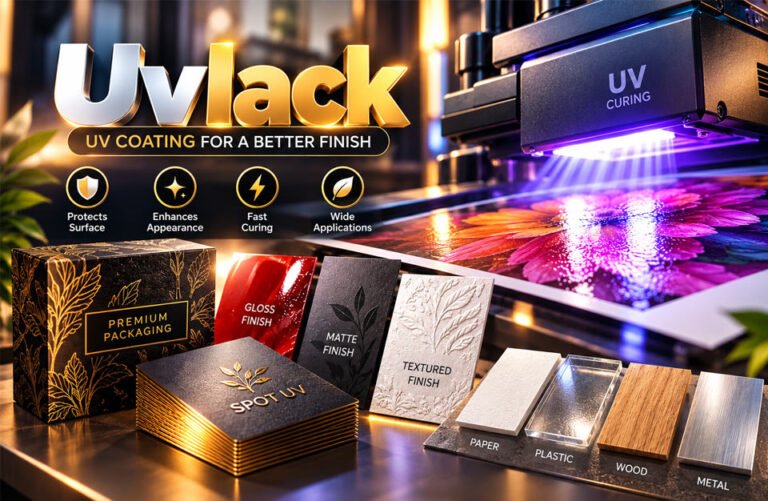
Uvlack is a type of UV lacquer, UV varnish, or UV coating. It is used to protect surfaces and improve how they look and feel.
It is mainly used in printing and packaging. Similar UV coatings are also used on wood, plastic, metal, and other materials.
People search for Uvlack because its meaning is not always clear online. Some sources use the word for UV lacquer in general. Another source links UVLACK with a UV varnish product line.
This guide explains what Uvlack is, how it works, its types, uses, benefits, limitations, safety, cost, and other useful details.
What Is Uvlack?
Uvlack is generally a UV-curable lacquer or varnish. It starts as a liquid. After it is put on a surface, UV light turns it into a hard layer.
This coating has two main jobs. It helps protect the surface from scratches, moisture, rubbing, and normal handling. It can also make the surface look glossy, matte, textured, or raised.
Uvlack is closely related to terms such as UV coating, UV lacquer, and UV varnish. These names are often used for similar coating processes.
One explanation says the name combines UV, meaning ultraviolet, with lack, a word used for lacquer or varnish in some European languages.
One collected source also links UVLACK with a UV varnish product line. However, other sources use Uvlack more generally for UV lacquer and UV coating.
Some websites describe Uvlack as software or a digital platform. The information collected for this article does not strongly support those meanings. Most of the information connects Uvlack with physical UV coatings.
How Does Uvlack Work?
Uvlack works through a process called UV curing.
Normal varnish may need air or heat to dry. Uvlack works differently. UV light starts a chemical reaction that quickly turns the liquid coating into a solid layer.
First, the liquid coating is put on the surface. It can cover the whole surface or only selected parts.
The material then moves under a UV lamp or UV-LED light.
The coating contains chemicals called photoinitiators. These chemicals react to UV light and start the curing process. The liquid materials join together and form a hard coating.
The basic process is:
- Apply the liquid coating.
- Move the material under UV light.
- UV light activates the coating.
- The liquid turns into a solid layer.
- The product moves to the next production step.
The process can be very fast. In a properly set up system, curing may happen in less than a second or within a few seconds.
This is useful for printing and manufacturing. Products can quickly move to cutting, folding, binding, packing, or other steps.
The exact curing time depends on the coating, UV light, machine speed, coating thickness, and surface material.
What Is Uvlack Made Of?
The exact ingredients depend on the product. A normal UV coating can contain oligomers, monomers, photoinitiators, and additives.
Oligomers and monomers help form the main structure of the hard coating.
Photoinitiators react to UV light. They start the chemical reaction that makes the coating hard.
Other ingredients can be added for different purposes.
For example, matting agents reduce shine. Slip agents can improve resistance to rubbing and scratches. Defoamers help reduce bubbles during application.
The coating also needs to match the UV curing equipment. A coating made for one type of UV lamp may not work correctly with another.
Main Types of Uvlack
Uvlack comes in different finishes. The best type depends on the material and the look you want.
Gloss Uvlack
Gloss Uvlack creates a shiny surface.
It can make colors look brighter and stronger. It is often used on packaging, labels, brochures, and marketing materials.
Matte Uvlack
Matte Uvlack has less shine.
It creates a softer and less reflective surface. It is often used for book covers, cards, and premium packaging.
Spot Uvlack
Spot Uvlack is used only on selected parts of a design.
For example, UV coating can be added to a logo, title, image, or product name while the rest of the surface stays matte or uncoated.
This creates a clear difference between the coated and uncoated areas.
Textured and Raised Uvlack
Some UV coatings can create special textures or raised effects.
The surface may feel soft, rough, sandy, or raised. Thick UV coating can also make text or graphics stand slightly above the surface.
These effects are useful when a design needs extra depth or texture.
Full-Surface Uvlack vs Spot UV
Full-surface Uvlack covers most or all of a surface. It creates an even finish and gives wider protection.
A full gloss coating creates more shine. A full matte coating creates a softer appearance.
Spot UV is only used on selected areas.
For example, a package may have a matte background with a shiny logo. This makes the logo easier to notice.
Spot UV must be placed carefully. The coating needs to line up correctly with the logo, text, or image.
Using spot UV on only a few important areas can also create a cleaner design.
Where Is Uvlack Used?
Uvlack is mainly used in printing and packaging. UV coating technology is also used in manufacturing.
Printing and Marketing Materials
UV lacquer can be used on:
- Business cards
- Brochures
- Flyers
- Magazines
- Book covers
- Greeting cards
- Folders
- Postcards
- Posters
- Marketing materials
Gloss coating can make colors and photos stand out. Matte coating creates a softer look. Spot UV can highlight important parts of a design.
The coating can also help protect printed materials from everyday handling.
Packaging
UV coating is commonly used on packaging.
It can be added to product boxes, labels, folding cartons, cosmetic boxes, and other types of packaging.
A full coating gives the package an even finish. Spot UV can highlight a logo, product name, or image.
The coating also helps protect printing from rubbing, fingerprints, light moisture, and normal handling.
Industrial Applications
UV coatings are not only used on paper.
They can also be used on suitable wood, plastic, and metal surfaces.
Examples can include furniture, flooring, electronic housings, automotive interior parts, metal packaging, and cans.
Industrial coatings may need stronger protection from scratches, chemicals, or heavy use.
Benefits of Uvlack
One of the biggest benefits of Uvlack is fast curing. The coating can become hard very quickly under the correct UV light.
This saves time during production. Printed materials can move to cutting, folding, binding, or packing without a long drying period.
Uvlack can also help protect surfaces from scratches, scuffs, fingerprints, light moisture, and normal handling.
It can improve appearance too. Gloss coating makes colors look stronger. Matte coating reduces shine. Spot and raised UV can make selected areas stand out.
Main benefits include:
- Fast curing
- Scratch and scuff resistance
- Protection from normal handling
- Some protection from light moisture
- Gloss and matte options
- Spot and raised effects
- Better surface feel
- Faster production
- Lower VOC emissions than many solvent-based coatings
The exact benefits depend on the coating, material, equipment, and curing process.
Limitations of Uvlack
Uvlack is not suitable for every project.
It needs special UV curing equipment. This can cost more than normal air-drying equipment, and not every printer has it.
The coating must also match the material. A coating that works well on paper may not work the same way on plastic or metal.
Some hard UV coatings can crack when the material is folded sharply. This can be a problem with boxes and other folded products.
UV coating also does not always provide as much physical protection as lamination. Lamination adds a full film over the surface.
Cost is another point to consider. UV coating usually adds to the price of normal printing. Spot, textured, and raised effects may cost more.
Poor curing can also cause problems. The coating may not stick or harden correctly if the machine settings are wrong.
Testing before a large production run can help prevent these problems.
Uvlack Equipment and Production Requirements
Uvlack needs equipment that can apply the coating and cure it with UV light.
The coating may be applied with rollers, screens, flexographic units, or other suitable systems.
After application, the material passes under a UV curing system.
Traditional mercury-vapor UV lamps are commonly used. UV-LED systems are another option. LED systems can use less energy, produce less heat, and last longer in suitable applications.
The coating must match the UV light being used. A coating made for one UV system may not cure properly with another.
Important production factors include:
- UV light strength
- Machine speed
- Coating thickness
- Surface material
- Ink
- Coating formula
- Registration
- Machine settings
Correct setup and maintenance are important for good results.
Uvlack vs Other Finishes
There are several ways to protect printed materials. Uvlack, normal varnish, aqueous coating, and lamination all work differently.
Uvlack vs Regular Varnish
Both can protect a printed surface.
The main difference is drying. Uvlack cures quickly under UV light. Regular varnish usually takes longer because it dries through air, evaporation, or other processes.
UV lacquer can be useful when fast production is important.
Uvlack vs Aqueous Coating
Aqueous coating is mainly water-based.
It normally dries using air, evaporation, and heat. UV coating usually cures faster and can create a stronger gloss.
Aqueous coating may be cheaper and easier for printers that do not have UV equipment.
The best option depends on the job, budget, equipment, and finish needed.
Uvlack vs Lamination
Lamination adds a separate film over the printed material.
This normally gives stronger physical protection than UV coating.
Uvlack creates a thinner layer. It still gives useful protection and offers gloss, matte, spot, and textured effects.
Lamination may be better when strong protection is the main goal. Uvlack can be better when appearance and fast production are more important.
UV Coating vs UV Printing
UV coating and UV printing are different.
UV printing uses special ink that is cured with UV light.
UV coating adds another layer over a printed or manufactured surface. UV light then cures this coating.
A product can use UV printing without UV coating. It can also have UV coating added after printing.
In simple words, UV printing is about the ink, while UV coating is about the surface finish.
How Durable Is Uvlack?
Uvlack can provide good protection for normal use.
A properly cured coating can help protect against scratches, scuffs, rubbing, fingerprints, and light moisture.
Some industrial UV coatings can also provide extra protection against chemicals, weather, or repeated rubbing.
However, durability is different for every product.
It depends on the coating formula, thickness, material, curing quality, and how the finished product is used.
Lamination usually provides stronger physical protection because it adds a complete film over the surface.
Is Uvlack Safe?
Safety depends on whether the coating is still liquid or fully cured.
Uncured UV coating contains active chemicals. Workers should follow the manufacturer’s safety instructions and use suitable protective equipment when needed.
Strong UV light can also be harmful if a person is directly exposed to it. UV curing machines therefore need proper safety covers and shielding.
Fully cured UV coating is more stable and is generally suitable for normal handling.
Food packaging needs extra care. Not every UV coating is automatically suitable for food contact. The coating must meet the correct safety requirements for its intended use.
Environmental Considerations
UV coatings can release fewer volatile organic compounds (VOCs) than many traditional solvent-based coatings.
This is because much of the UV coating becomes part of the finished solid layer instead of evaporating into the air.
Fast curing also reduces the need for long drying times.
However, UV coating is not automatically environmentally friendly in every case.
UV lamps and LED systems use electricity. Production can also create waste.
The coating formula, energy use, equipment, waste, and full production process should all be considered when looking at environmental impact.
How Much Does Uvlack Cost?
There is no fixed price for Uvlack.
UV coating is normally a premium finishing option, so it usually costs more than basic printing without a special finish.
The price can depend on:
- Size of the coated area
- Number of items
- Full coating or spot UV
- Type of finish
- Coating thickness
- Material
- Production method
- Printing company
Spot, raised, and textured UV may need more detailed work than a simple full coating.
For an exact price, you need to ask a printing or coating company and provide the details of your project.
How to Choose the Right Uvlack Finish
First, decide what you want the coating to do.
Choose gloss if you want more shine and stronger-looking colors. Choose matte if you want less reflection and a softer look.
Spot UV is useful for highlighting a logo, image, or other important detail. Raised or textured UV can add more depth and feel.
Also think about the material. Paper, plastic, metal, and other surfaces may need different coatings.
Consider how the finished product will be used. Think about moisture, scratches, chemicals, folding, and outdoor use.
If possible, test a small sample before a large order.
Check:
- Curing
- Adhesion
- Gloss or matte appearance
- Scratch resistance
- Folding
- Spot-UV position
A physical sample is useful because shine and texture can be difficult to judge on a screen.
Common Uvlack Problems and How to Avoid Them
Poor Adhesion
Sometimes the coating does not stick properly.
This may happen when the coating is not suitable for the material or ink.
Solution: Test the coating on the real material before starting a large production run.
Incomplete Curing
The coating may stay soft or fail to harden correctly.
This can happen because of weak UV light, incorrect machine speed, coating thickness, or the wrong formula.
Solution: Check the UV system and use the correct settings for the coating.
Cracking During Folding
Some hard UV coatings can crack when the material is folded.
Solution: Test the fold first. A different coating or thickness may be needed.
Poor Spot-UV Registration
Spot UV may not line up correctly with the printed logo, text, or image.
Solution: Check the position carefully before starting the full production run.
Uneven Gloss or Texture
The surface may look uneven if the coating is not applied correctly.
Solution: Check the coating thickness, material, machine settings, and curing process.
Wrong Coating Thickness
A very thin layer may not give the expected look or protection. A very thick layer may need different curing settings.
Solution: Use the correct coating thickness for the product and equipment.
Ink and Coating Compatibility Problems
Some inks and UV coatings may not work well together.
Solution: Test the ink, material, and coating together before large-scale production.
Bottom Line
Uvlack generally means a UV-curable lacquer, varnish, or coating. It is mainly used in printing, packaging, and surface finishing.
UV light quickly changes the liquid coating into a hard layer. The finish can be glossy, matte, spot, textured, or raised.
UV coatings can be used on suitable paper, paperboard, plastic, wood, metal, and other surfaces.
The main benefits are fast curing, better appearance, surface protection, and faster production. The main limitations are extra equipment, added cost, material compatibility, and the need for correct curing.
Choosing the correct coating and testing it on the actual material can help produce better results.
Frequently Asked Questions
What is Uvlack?
Uvlack is a coating that becomes hard under UV light. It helps protect surfaces and improve their look.
Is Uvlack the same as UV coating?
Yes, Uvlack is commonly linked with UV coating, UV lacquer, or UV varnish. The exact name may depend on the product or company.
How quickly does Uvlack dry?
Uvlack can become hard very quickly under UV light. With the right equipment, it may cure in seconds or less.
Is Uvlack only used on paper?
No. Uvlack can also be used on suitable plastic, wood, metal, paperboard, and other surfaces.
What is the difference between spot UV and full UV coating?
Full UV covers most or all of a surface. Spot UV is added only to selected areas, such as a logo or image.
Is Uvlack more durable than lamination?
Usually not. Lamination gives stronger protection, but Uvlack can still protect against scratches, rubbing, and normal handling.
Is Uvlack safe?
Fully cured Uvlack is generally safe for normal handling. Uncured coating and strong UV light need proper safety measures.
Is Uvlack the same as UV printing?
No. UV printing uses UV light to harden ink, while Uvlack adds an extra coating over the surface.
Discover More:
MathsSpot: Browser Games, Educational Gaming, Tips, and Alternatives
