


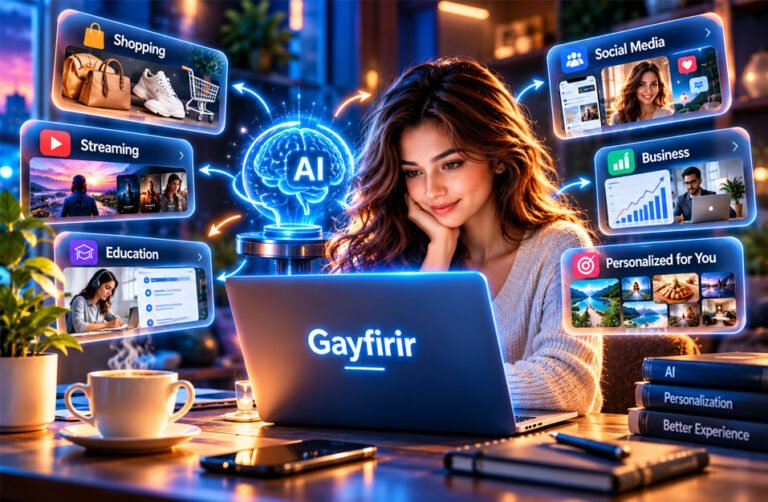
Gayfirir is a new online term linked with smart apps, artificial intelligence (AI), and personalized digital experiences. Some websites use this word to explain how apps learn from user activity and suggest content based on their interests.
People search for Gayfirir to understand what it means, how it works, and whether it is a real technology. This article explains its meaning, features, uses, benefits, risks, and privacy concerns in simple words.
What Is Gayfirir?
Gayfirir is an informal word used in some online articles to describe apps and websites that change their content based on user activity. These systems look at what people search for, watch, like, or save.
For example, a music app may suggest songs based on what someone listens to. An online store may show products related to recent searches. A learning app may suggest lessons based on student progress.
This type of technology is called adaptive technology. It helps apps provide content that may match a user’s needs.
However, Gayfirir is not an official AI model, app, or programming language. It is a term linked with existing technologies such as machine learning and personalized recommendations.
The word may also have different meanings in other online discussions.
Origin and Background of Gayfirir
The exact origin of Gayfirir is unknown. There is no confirmed information about who created the word or when it first appeared.
Some online articles connect Gayfirir with artificial intelligence, smart apps, and personalized content. Others discuss it in relation to digital identity, creativity, and personal expression.
These different uses show that the word does not have one accepted meaning.
New internet words can come from social media, online groups, websites, or creative projects. However, there is no clear evidence showing where Gayfirir first started.
For now, it is best understood as an informal online term rather than an official technology.
How Does Gayfirir Work?
The technology linked with Gayfirir uses information about user activity to suggest useful content or change how an app works.
It usually follows a few simple steps.
Collecting User Information
Apps may collect information about what people do while using them.
This can include searches, clicks, likes, saved posts, watched videos, and purchases. Some apps also consider the device being used or the time of day.
For example, someone who often watches cooking videos may start seeing more recipes.
However, one search or click does not always show a person’s real interests. Someone may open a page by mistake or search for something for another person.
Finding Patterns
After collecting information, the system looks for common patterns.
It may compare recent activity with older searches or viewing history. Some systems also look at what people with similar interests enjoy.
For example, a movie app may suggest films that other viewers with similar interests have watched.
Selecting Personalized Results
The app then chooses which content to show.
It may place useful videos, products, articles, or other suggestions near the top of the screen.
For example, a shopping website may show sports shoes after someone searches for running equipment.
Adjusting to New Behavior
People’s interests can change, and some apps can respond to these changes.
For example, someone who usually watches comedy videos may start watching documentaries. The app may then suggest more documentaries.
This does not mean the app knows exactly what someone wants. It simply makes predictions based on available information.
Some systems use AI, while others work through basic settings and rules.
Main Features of Gayfirir-Style Technology
Gayfirir is linked with several features found in modern apps and websites. These are features of adaptive technology, not one official Gayfirir application.
Personalized Recommendations
Personalized recommendations help people find content that may interest them.
A music app may suggest songs based on listening history. An online store may show products related to recent searches.
Behavior-Based Adaptation
This feature allows apps to respond to user habits.
For example, an app may make frequently used tools easier to find. It may also change suggestions when someone starts exploring new topics.
Predictive Suggestions
Predictive suggestions help apps guess what users may want next.
An online store may recommend a phone case after someone adds a phone to their cart. A writing app may suggest useful words or actions.
These suggestions are not always correct.
Adaptive Interfaces
An adaptive interface can change parts of an app to make it easier to use.
It may show shortcuts, offer extra help to beginners, or adjust some screen features.
However, important buttons and menus should remain easy to find.
Real-Time Responses
Some apps can change content immediately after a user makes a choice.
For example, choosing a vegetarian filter on a recipe website may show only vegetarian meals.
This does not always require AI. Simple settings can also make these changes.
Personalized Learning
Learning apps can change lessons based on student progress.
A student who finds a topic difficult may receive extra practice. Another student who understands it may move to harder questions.
These tools can support learning, but they do not replace teachers.
Feedback Controls
Feedback controls allow users to change the suggestions they receive.
Many apps provide options such as “Not Interested” or “Show Less.”
Some also allow users to clear their history or reset recommendations.
Technologies Behind Gayfirir
Several existing technologies are connected with the idea of Gayfirir.
Machine learning helps computers find patterns in information. Apps use it to make predictions and improve suggestions.
Recommendation systems suggest videos, music, products, and articles based on user interests. Some compare similar content, while others look at what different users enjoy.
User modeling helps apps understand user interests and habits. This information can improve future suggestions.
Predictive analytics uses past information to estimate what may happen next.
Natural language processing (NLP) helps computers understand and work with human language. It is used in chatbots, search tools, and other applications.
Generative AI can create text, images, and answers based on user instructions. It can also help provide responses that match a person’s needs.
These technologies may work together in one app. However, none of them is officially called Gayfirir.
Gayfirir vs Traditional Personalization
Traditional personalization and adaptive personalization both help apps provide a better experience.
Traditional personalization often depends on settings chosen by the user. For example, someone may select a language, favorite topic, or notification preference.
Adaptive personalization can also respond to recent activity.
For example, a person who usually watches sports videos may start searching for travel information. The app may begin suggesting travel content.
| Traditional Personalization | Adaptive Personalization |
|---|---|
| Uses saved preferences | Uses recent and past activity |
| Often needs manual settings | Can make automatic changes |
| Usually follows selected choices | Can respond to new interests |
| Often stays the same until updated | May change as someone uses the app |
| Example: Choosing a language | Example: New video suggestions |
Many modern apps use both methods.
Gayfirir is sometimes used to describe adaptive personalization, but it is not an official name for this technology.
Where Is Gayfirir Used?
The ideas linked with Gayfirir can be found in many apps and online services.
Online Shopping
Online stores use recommendation systems to help customers find products.
For example, someone searching for running shoes may see sports clothing, footwear, or related accessories.
These suggestions can depend on searches, saved products, and shopping activity.
Streaming and Entertainment
Streaming platforms suggest music, movies, television shows, podcasts, and videos.
They may look at what someone watches, skips, saves, or plays again.
For example, someone who regularly listens to jazz may receive more jazz recommendations.
However, watching something once does not always mean a person wants similar content.
Education and Learning
Learning platforms can use adaptive technology to help students.
They may look at quiz answers, completed lessons, and common mistakes.
A student who struggles with mathematics may receive more practice questions. Someone doing well may receive harder lessons.
These tools can help students learn at a suitable pace.
Websites and Social Media
Websites and social media platforms use personalized feeds and content suggestions.
A news website may show more technology articles to someone who often reads technology news.
Social media apps may suggest creators, videos, or pages based on user interests.
These features can help people discover useful content, but they may also show too much of the same type of information.
Business Software and Customer Support
Business apps can use adaptive features to make everyday work easier.
For example, a dashboard may show reports that an employee opens regularly. A project management tool may suggest tasks related to current work.
Customer support systems may also suggest answers based on a user’s problem.
Someone having trouble logging in may receive account recovery instructions.
Fitness and Accessibility
Fitness apps may suggest workouts based on activity history, completed sessions, or personal goals.
For example, an app may recommend a lighter workout after someone misses several sessions.
Adaptive technology can also help people with different needs. Some apps may adjust text size, instructions, or screen controls to make them easier to use.
Gayfirir and Digital Identity
Some online discussions also connect Gayfirir with digital identity, creativity, and personal expression.
Digital identity includes the information people use to represent themselves online. This may include usernames, profile pictures, avatars, posts, and online activities.
Some articles use Gayfirir when discussing individuality and online communities. These communities can help people share ideas, artwork, and personal interests.
The word has also appeared in discussions about LGBTQ+ online spaces. However, there is no confirmed evidence that Gayfirir is an official gender identity, sexual orientation, or LGBTQ+ category.
These meanings are different from its connection with adaptive technology.
Benefits of Gayfirir
The main benefits of Gayfirir-style technology come from making apps more useful and easier to use.
One benefit is saving time. Personalized recommendations can help people find useful videos, articles, and products without searching for too long.
It can also make apps easier to navigate. Frequently used tools may become easier to access.
In education, personalized lessons can help students focus on subjects they find difficult.
Businesses may use adaptive dashboards and customer support tools to complete tasks more quickly.
Some adaptive features can also improve accessibility by changing text, instructions, or controls based on user needs.
However, these benefits depend on how well the app works. Wrong suggestions can make the experience less useful.
Drawbacks and Limitations of Gayfirir
Adaptive technology also has some problems.
One common problem is wrong recommendations. An app may misunderstand a person’s interests and continue showing unwanted content.
New users may also receive poor suggestions because the app does not have enough information about them. This is known as the cold-start problem.
Shared accounts can create similar problems. If several family members use one account, the app may mix their interests.
Another issue is showing too much similar content. This can limit the different topics and opinions users see. It is sometimes called a filter bubble.
AI systems may also produce unfair results when they use incomplete or biased information.
Some adaptive apps can become confusing if buttons, menus, or other features change too often.
Also, spending more time on a website does not always mean someone enjoys it. A person may stay longer because the website is difficult to use.
For these reasons, apps should consider user feedback instead of depending only on clicks and viewing time.
Privacy and Security Concerns
Privacy is one of the main concerns linked with Gayfirir-style technology.
Personalized apps may collect searches, viewing history, clicks, purchases, and other activities. Some may also use device or location information.
This information can reveal personal interests and habits.
Users may not always know what information is collected, how long it is stored, or who can access it.
Poor security can also put personal information at risk. If a platform is hacked, stored data may be exposed.
Some services may share user information with advertising companies or other partners.
Responsible platforms should collect only the information they need. They should also explain how information is used and give users ways to manage it.
Privacy laws may also apply. For example, the European Union’s General Data Protection Regulation (GDPR) sets rules for handling personal information.
Gayfirir itself is not a verified app, so its safety cannot be checked as one product. Safety depends on the actual website or application.
How to Control Personalized Recommendations
Many apps allow users to manage the content they see.
Here are some simple ways to control personalized recommendations:
-
Check privacy settings: See what information the app collects.
-
Change interests: Update saved topics and preferences.
-
Hide unwanted content: Use “Not Interested” or “Show Less” when available.
-
Clear activity history: Remove searches or viewing history that affects suggestions.
-
Reset recommendations: Start fresh if the app provides this option.
-
Turn off personalization: Disable personalized features or tracking when possible.
Users should also check whether clearing their history removes stored information or only changes recommendations.
Not every app offers the same controls.
How to Evaluate a Platform Claiming to Use Gayfirir
Since Gayfirir is not an official technology or product, users should check any platform that claims to offer it.
First, look for information about the company or developer. The website should clearly explain who runs the service.
Next, check what the platform actually does. It should explain its features in simple words.
Read the privacy policy to understand what information is collected and how it is used.
You can also test the platform. Change a preference or reject a suggestion to see whether the results improve.
Check whether the service allows users to control recommendations and personal information.
Some tasks may work just as well with simple filters or settings, without needing advanced AI.
A platform should not be considered safe or useful only because it uses words such as AI, smart technology, or Gayfirir.
Future of Gayfirir and Adaptive Technology
Adaptive technology may become more useful as AI continues to improve.
Future apps may respond more quickly to user interests and needs. They may also offer better recommendations and easier controls.
Learning platforms could provide lessons based on student progress. Business apps may suggest tasks and tools based on everyday work.
Creative tools may offer writing, design, and content suggestions that match user preferences.
Adaptive technology may also help improve accessibility by making apps easier for different people to use.
However, privacy and user control will remain important. People should know when an app is using their information and how they can change its suggestions.
The future of the word Gayfirir is still uncertain. It may become more common, develop a clearer meaning, or disappear from online discussions.
The technologies connected with it will continue to develop regardless of what happens to the word.
Bottom Line
Gayfirir is an informal online term linked with adaptive technology and AI personalization. It describes the idea of apps and websites adjusting content based on user behavior.
It is not a confirmed standalone app, AI model, or official technical standard.
The technologies associated with Gayfirir can help people find useful content, learn more easily, and complete everyday tasks. However, privacy risks, wrong suggestions, and AI bias are important concerns.
The best personalized systems help users while giving them control over their information and choices.
Frequently Asked Questions
What does Gayfirir mean?
Gayfirir is an online term linked with apps that suggest content based on what users like and do.
Is Gayfirir an official AI technology?
No. Gayfirir is not an official AI technology. It is a term linked with personalized apps and websites.
How does Gayfirir work?
Apps look at what users search, watch, or click and suggest content based on their interests.
What are the main uses of Gayfirir?
Related technology is used in shopping, entertainment, education, social media, and business apps.
Is Gayfirir safe to use?
Gayfirir is not a confirmed app. Safety depends on the website or app and how it protects user data.
Can I download Gayfirir?
No official Gayfirir app has been confirmed. The term is mainly used in online articles.
Can users turn off Gayfirir-style personalization?
Yes, many apps let users change settings or turn off personalized suggestions, but not all apps offer this option.
Is Gayfirir the same as artificial intelligence?
No. AI is a real field of technology, while Gayfirir is an informal term linked with smart apps and personalized content.
Discover More:
